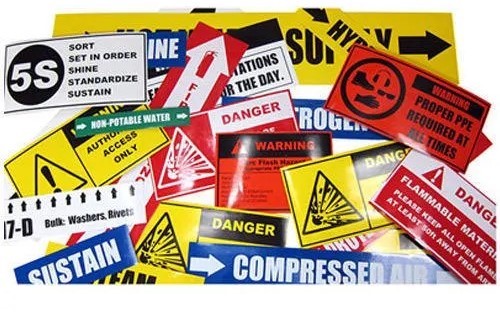

Industrial labels play an important role in identifying machinery, products, components, control panels, electrical equipment, and other industrial assets. Unlike ordinary stickers or commercial labels, industrial labels are designed to withstand demanding environments such as heat, moisture, chemicals, abrasion, UV exposure, and continuous handling.
From machine identification and safety instructions to product branding and technical information, industrial labels help businesses maintain clear communication and improve workplace safety.
In this blog, we will explore what industrial labels are, their common types and materials, major applications, and the key benefits they offer across different industries.
Industrial labels are specially designed labels used for identification, warning, instruction, tracking, branding, and information display in industrial and commercial environments.
These labels can contain text, numbers, symbols, barcodes, logos, technical specifications, operating instructions, safety warnings, or other important information.
Industrial labels are generally manufactured using durable materials and specialized printing techniques to ensure that the printed information remains readable even under challenging operating conditions.
They are commonly used on:Industrial environments often contain complex machinery and equipment. Employees need to quickly identify components, understand operating instructions, recognize hazards, and locate important technical information.
Industrial labels provide a simple and effective way to communicate this information.
For example, a machine may require labels indicating:
A properly designed industrial label can make important information immediately visible and easier to understand.
Industrial labels are available in different designs and formats depending on their application, environment, and information requirements.
1. Machine Labels
Machine labels are used to identify machinery and provide essential operating information. They can include machine names, specifications, controls, instructions, and warning messages.
These labels are commonly found on manufacturing machinery, CNC equipment, packaging machines, automation systems, and industrial processing equipment.
2. Safety Labels and Warning Stickers
Safety labels communicate potential hazards and provide safety instructions to workers.
They may include warning symbols, mandatory instructions, danger signs, and precautionary information.
Safety labels are particularly important in factories, workshops, warehouses, and manufacturing facilities where workers interact with machinery and electrical equipment.
3. Control Panel Labels
Control panel labels identify buttons, switches, indicators, controls, and other components on electrical and automation panels. Clear control panel labels help operators understand the function of individual controls and operate equipment more efficiently.
They can be customized according to the panel layout, button configuration, colors, symbols, and technical requirements.
4. Equipment Identification Labels
Equipment identification labels are used to provide information about specific machines, tools, components, and industrial assets.
They can include:
5. Product Identification Labels
Product labels provide important information about manufactured products and components. Depending on the product, these labels may contain model numbers, specifications, barcodes, logos, or usage instructions.
They are widely used in automotive, electrical, electronics, engineering, and consumer product manufacturing.
6. Polycarbonate Labels
Polycarbonate labels are popular for industrial applications where durability and a professional appearance are required.
Polycarbonate provides good resistance to moisture, abrasion, and general industrial handling. These labels can also be customized with different colors, graphics, symbols, and text.
They are commonly used for control panels, electrical equipment, machinery, and electronic products.
7. Vinyl Industrial Labels
Vinyl labels are flexible and suitable for a wide range of industrial identification and warning applications.
They can be produced in different sizes, shapes, and designs and are often used where flexibility and good print quality are important.
8. Industrial Nameplates
Industrial nameplates provide permanent or long-lasting identification for machinery, equipment, products, and components.
Depending on the application, nameplates may be manufactured using materials such as aluminum, stainless steel, polycarbonate, or other suitable substrates.
The material selected for an industrial label depends largely on the environment in which it will be used.
Polycarbonate
Polycarbonate is widely used for industrial labels and graphic overlays because of its durability and attractive finish.
It is suitable for applications involving frequent handling and exposure to moisture, abrasion, and general industrial conditions.
Polyester
Polyester is another popular material for industrial labels. It provides good dimensional stability and durability and can be suitable for electrical, electronic, and equipment identification applications.
Vinyl
Vinyl is flexible and versatile, making it suitable for various industrial stickers, decals, warning labels, and identification applications.
Aluminum
Aluminum is commonly used for durable industrial nameplates and equipment identification plates. It provides a professional appearance and can be suitable for demanding environments.
Stainless Steel
Stainless steel can be selected for applications requiring excellent durability and resistance to harsh environmental conditions. It is commonly used for equipment identification and industrial nameplates in demanding applications.
Selecting the right industrial label involves more than choosing a design. The label should be suitable for its operating environment and application.
Environmental Conditions
Consider whether the label will be exposed to:
The expected environment helps determine the appropriate label material and printing method.
Adhesive Requirements
The adhesive should be compatible with the surface on which the label will be applied.
Different applications may require different adhesive characteristics depending on the surface material, temperature, moisture, and expected service life.
Label Size and Shape
The label should be large enough for the information to remain clearly readable while fitting properly on the equipment.
Custom shapes and die-cut labels can be produced for specialized applications.
Printing and Graphics
Text, symbols, logos, warning signs, barcodes, and technical graphics should remain clear throughout the expected life of the label.
High-quality printing is particularly important for safety and equipment identification labels.
Durability
Industrial labels should be selected according to the expected level of wear and exposure. Labels used on machinery or outdoor equipment may require greater resistance than labels used in controlled indoor environments.
Industrial labels are used across numerous sectors because almost every manufacturing and engineering environment requires equipment identification and information display.
Automotive Industry
Industrial labels are used for automotive components, machinery, control panels, identification plates, and safety instructions.
Electrical and Electronics Industry
Electrical equipment often requires labels displaying voltage information, warning symbols, component identification, and operating instructions.
Engineering and Manufacturing
Manufacturing facilities use industrial labels to identify machines, components, production equipment, tools, and operating controls.
Pharmaceutical Industry
Pharmaceutical manufacturing requires clear identification and information labels for equipment, containers, machinery, and production systems.
Chemical Industry
Chemical processing facilities require durable labels for equipment identification, hazard communication, safety instructions, and process information.
Food Processing Industry
Industrial labels can be used on food processing machinery, control panels, equipment, and production systems where clear identification is essential.
Warehousing and Logistics
Labels help identify equipment, storage systems, containers, packages, and assets, supporting organized operations and efficient material handling.
Improved Equipment Identification
Industrial labels make it easier for operators and maintenance teams to identify machines, components, and equipment.
Enhanced Workplace Safety
Warning labels and safety stickers provide visible information about potential hazards and operating precautions.
Better Operational Efficiency
Clearly marked buttons, controls, and equipment allow employees to locate information quickly and operate machinery more efficiently.
Long-Lasting Identification
Industrial-grade materials and printing techniques can provide durable identification compared with ordinary paper labels.
Professional Appearance
Customized labels and nameplates can improve the visual appearance of machinery and equipment while displaying important information.
Customization
Industrial labels can be customized according to size, shape, material, color, graphics, text, adhesive, and application requirements.
Reduced Maintenance Confusion
Proper equipment identification helps maintenance personnel quickly recognize machines and components, which can simplify inspection and maintenance activities.
One of the major differences between industrial and ordinary labels is the level of durability required.
| Feature | Industrial Labels | Ordinary Labels |
|---|---|---|
| Durability | Designed for demanding environments | Generally designed for lighter use |
| Materials | Polycarbonate, polyester, vinyl, metal and others | Paper and standard films |
| Applications | Machinery, equipment, control panels | Packaging, office and general uses |
| Environmental Resistance | Can be designed for heat, moisture, chemicals and abrasion | Usually more limited |
| Customization | Highly customizable | Typically standard |
| Information | Technical, safety and identification information | General product information |
Even durable industrial labels can benefit from proper installation and maintenance.
Before applying a label, the surface should be clean, dry, and free from dust, oil, grease, or other contaminants. The correct label material and adhesive should also be selected for the application.
Regular inspection can help identify damaged, faded, loose, or unreadable labels so that they can be replaced when necessary.
Industrial labels are an essential part of modern manufacturing, engineering, electrical, automotive, pharmaceutical, chemical, and other industrial environments. They provide clear identification, safety information, operating instructions, and technical details while helping organizations maintain efficient and organized operations.
The right industrial label depends on factors such as material, application, environmental conditions, adhesive requirements, durability, size, and printing requirements. Polycarbonate, polyester, vinyl, aluminum, and stainless steel are among the materials commonly considered for different applications.
For businesses requiring customized and durable identification solutions, working with an experienced industrial label manufacturer can help ensure that the selected material, printing method, adhesive, and design are appropriate for the intended application.
Fill out the form below to start a conversation with us on WhatsApp.
Fill out the form below to start a conversation with us on WhatsApp.